An audiovisual performance becomes more compelling when the relationship between sound and image has a purpose. A visual does not need to react to every beat. It might reveal a musical gesture, establish a space, interrupt a pattern or create a slower counterpoint.
Start with a relationship
Write a sentence describing what the audience should experience. For example: a small sound gradually opens a large visual space. That sentence can guide the choice of imagery, musical material and live controls before the technical system becomes complicated.
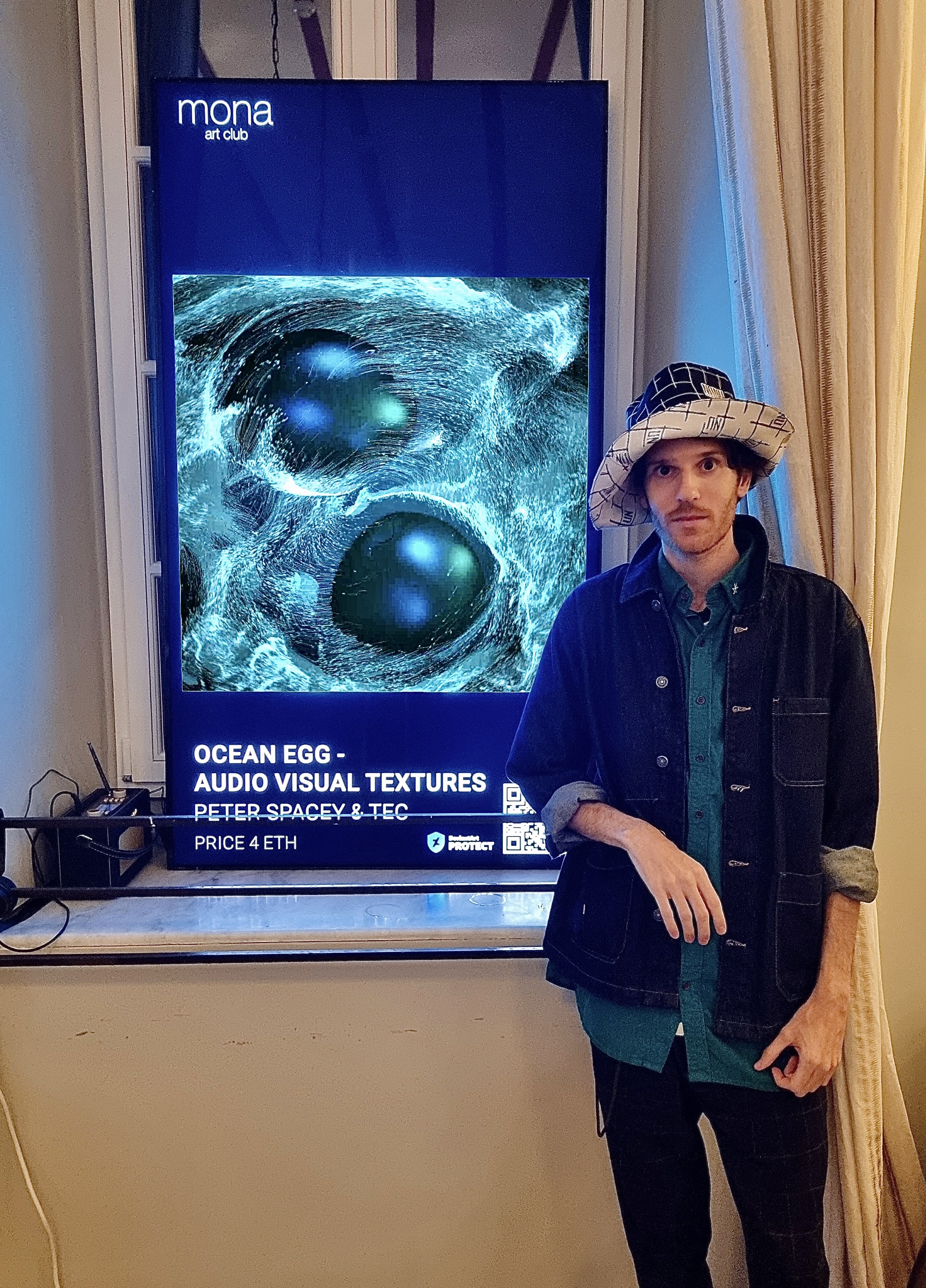
The ZERO|1NE programme for Analog Space documents a collaboration between Peter Spacey and Analog Front. It describes original live music within a cube surrounded by 360-degree projection, alongside analog video synthesis and camera feedback receiving sound from the performance. This is a documented reference, rather than a reconstruction of the artists' private working method.
Choose what is connected
Sketch three columns: a musical event, a visual response and the person or system controlling the relationship. A drum accent might trigger a brief change; a sustained sound might influence a slow transformation; a performer might decide when the entire scene changes.
Choose only a few meaningful connections for the first rehearsal. If every sound changes every parameter, it becomes difficult to understand which relationship carries the piece. Leave some visual behaviour independent so that a real connection can stand out when it matters.
Design contrast across the performance
Make three states: an introduction with limited material, a denser section and a release. Give each state a distinct visual behaviour, not just a different colour. One could remain nearly still, another accumulate traces, and another reveal a previously hidden surface.
Listen to the music while watching these states at their intended duration. A beautiful ten-second loop may become tiring after several minutes. Give the image opportunities to pause and the sound opportunities to lead.
Separate the artwork from its delivery system
Create a simple cue sheet naming each section, its trigger and its fallback. Agree who starts the performance, who controls transitions and what happens if the image stops. Test the actual display layout before relying on details that may disappear on a projector or at a distance.
Check brightness, text readability and motion from the audience's position. Avoid using rapid flashing as a default marker of musical energy. A change in scale, density or direction can communicate an arrival without overwhelming the room.
Record the relationship, then refine it
Film a rehearsal with a view of the overall image and record clear audio. Watch once for structure and once for the connection between gestures and results. Write down moments where the relationship becomes legible and moments where it feels arbitrary.
Spacey's official video selection includes Analog Space material and Audio-Visual Frequencies. These provide places to explore his public work without inventing a technical breakdown. For your own performance, continue with Rehearse Your Electronic Live Set and turn the creative idea into something repeatable on stage.