A loop is good at making one moment feel convincing. A track asks a different question: what makes the next moment worth hearing? If your loop already has a character, the next step is usually to give it a changing context.
Name the thing worth keeping
Listen to the loop and choose its centre of attention. It might be a bass rhythm, a vocal fragment or the relationship between two sounds. Write one sentence describing it. This becomes a useful filter: an arrangement choice should reveal, delay, interrupt or transform that idea.
Save a copy before editing. Keep the original loop available so that a disappointing experiment never feels like losing the starting point.
Make three contrasting states
Create a sparse version, the complete version and a version with one deliberate change. The change could be a different bass ending, a quieter drum pattern or a melody played in another register. Avoid changing everything at once; listeners need something to recognise.
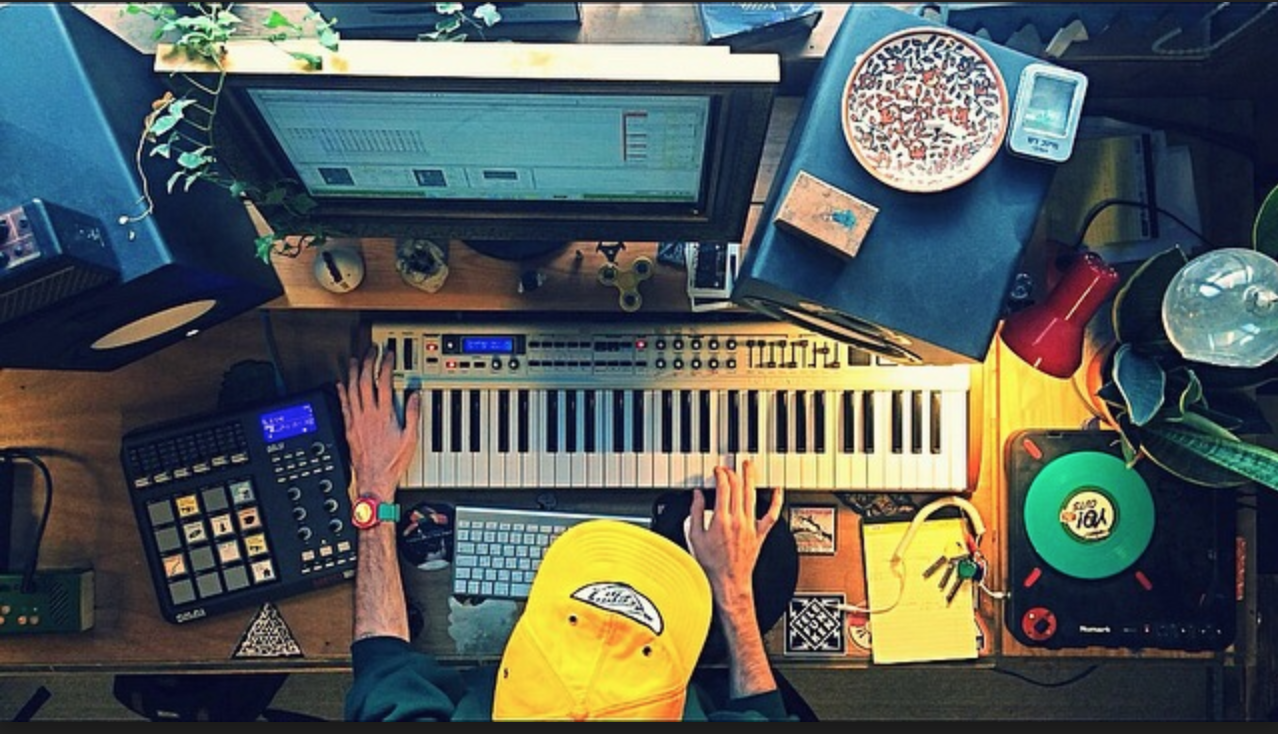
In Ableton Live, Session View lets you launch combinations of clips and record those choices into Arrangement View. That can make arranging feel like playing. Alternatively, place the clips directly on the timeline and edit them there. Both approaches can produce the same musical structure.
Give the first draft a limit
For this exercise, aim for roughly ninety seconds. That is a practical sketch length, not a preferred song format. Start with the sparse state, let the complete idea arrive, create a departure and decide how it ends. Use section lengths that suit what you hear.
If you work in repeated blocks, treat the boundaries as opportunities to listen. A change every eight bars can provide a useful starting grid, but it becomes mechanical when the sound has already said everything after four, or still needs time after twelve.
Make a transition do a job
Choose the most important arrival. Listen to the few seconds before it. Try removing one element, shortening a note or leaving a brief gap. Then hear the arrival again. You are testing whether the listener can feel a change in direction.
Only add a fill or effect if it improves that relationship. A loud riser can announce a section while hiding the fact that the section itself does not change. Contrast can also come from register, density, rhythm or a suddenly dry sound.
Finish the draft before judging the track
Play the entire arrangement without stopping. Mark three moments: where your attention increases, where it drifts and where the piece could end. Make one revision at each point. Avoid reopening sound selection unless a particular sound is preventing the arrangement from working.
Export the draft and listen later. You now have something that can be compared and discussed, rather than a loop surrounded by possible futures. For a different way to create variation, try Make One Sound Move. If the idea is meant for the stage, continue with Rehearse Your Electronic Live Set.